Hello World, how did I learn to code?
Table of contents
Hello World, how did I learn to code?
The first time I used a computer was at age 9 in my school’s computer lab. We used Logo Writer to control a turtle in MS-DOS, making it draw shapes or get stuck in infinite loops.
We didn’t have a computer at home, so that was the only time I got to use one. When I was 12, my dad brought home an IBM he used for work - 256 MB of RAM and a 10 GB hard drive. I installed programs, clicked everything I could, downloaded Neon Genesis Evangelion openings and endings as MIDI files (MP3s weren’t common back then), and played a lot of games on emulators.
One day while browsing, I found personal blogs on Blogspot . I read through them one after another. Some were bright and detailed, others minimal and elegant, others dark and gloomy. Each one felt like a reflection of its author, and I wanted one of my own.
Internet and blogs
After reading a few tutorials, I made my own blog called “manzana amarga” (bitter apple), named after a song from Shaman King. I wrote about my thoughts and the occasional photo of my day-to-day life.
I wanted to customize it, so I learned the basics of HTML and CSS to change fonts, colors, layouts, backgrounds, add scripts, and chatboxes.
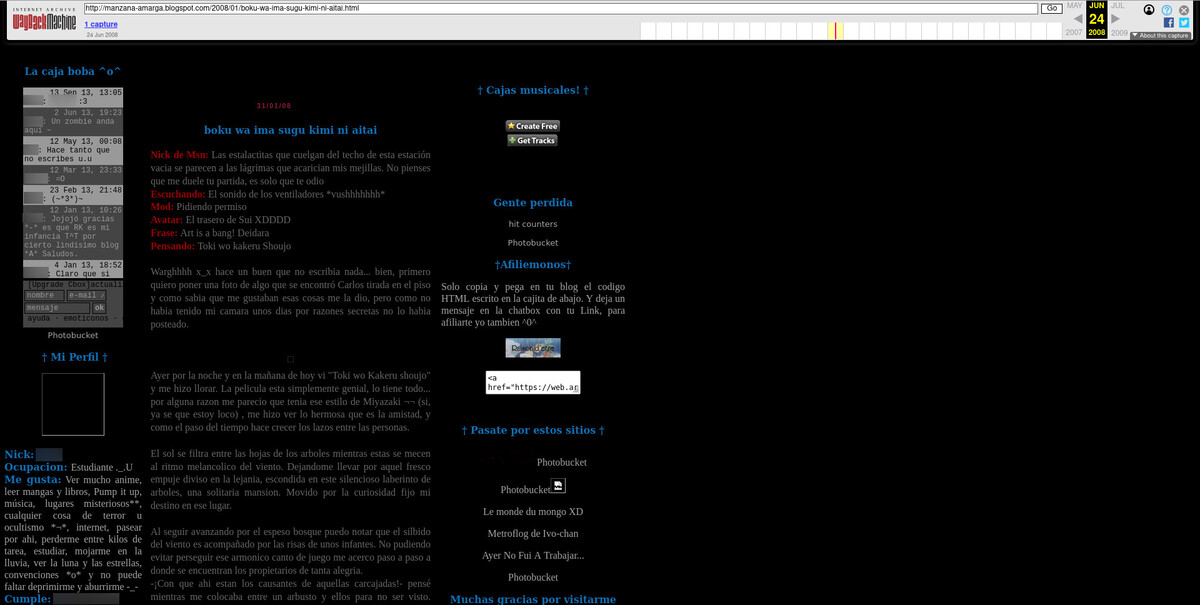
Registration of my blog archive.org, the layout was ruined because Photobucket changed its urls scheme.
A few years later, a good friend helped me get a job at a cyber café. I learned how to fix common issues, connect printers to a network, share files, edit the Windows registry, download torrents, manage Office and Photoshop, handle keyloggers, format computers, and more. I never wrote code there though.
While working at the cyber café, I decided to study chemistry since I was good at math and the hard sciences. I also made another blog called “Lluvia de fotones” (Rain of Photons) while taking classes.
University wasn’t for me. It felt slow, boring, and overly bureaucratic. Knowing how to search for information online gave me an edge over classmates who weren’t as tech-savvy. I still graduated in the top three of my class, but after looking at job options in my hometown, I knew I wouldn’t go into that field.
Supercell and Miku Hatsune
One afternoon, I was researching the Japanese band Supercell . They were unusual - their vocalist was a computer program called Vocaloid. It used Saki Fujita ’s voice to create a virtual singer, Miku Hatsune. Users could use her voice to sing their own lyrics with custom melodies and rhythms.
The more I learned about it, the more fascinated I was. The people behind Vocaloid were giving a voice to artists who wouldn’t otherwise have one. In that moment, I realized the potential of code. I wanted to do the same - use computers and code to create things.

Miku Hatsune plastic figure. Image credits to 南menghua https://pixabay.com/es/users/%E5%8D%97menghua-19298964/
I thought about going back to university, but quickly dismissed it. The programs were outdated, many professors weren’t great, and classes felt inefficient. This time, I’d learn on my own.
Moving from Windows to GNU/Linux
Around that time, I switched to GNU/Linux. It was tough at first - I missed Photoshop and some Windows-exclusive programs. But as I learned how it worked, I grew to prefer it. I started with Linux Mint, tried Kali for a year, and landed on Debian, which I’ve used ever since.
On Linux, I learned to install software and use basic commands. Then I set up a LAMP server and wrote my first “Hello World” in PHP.
My experience with PHP
PHP was my first programming language. After reading Beginning PHP and MySQL by W. Jason Gilmore at the municipal library, I learned the basics. But I found it overwhelming with its many functions, its syntax felt inconsistent, and I was disappointed that it wasn’t practical for building desktop apps.
PHP got me into programming, but it didn’t click. Then I met Python.
A language named after comedians
For a while, I avoided Python for a silly reason - I didn’t know Monty Python at the time and didn’t care about the name. Eventually I put that aside and tried the code.org Python course. I fell in love with it right away.
Python’s syntax was clean, functions were simple, and the design just made sense.
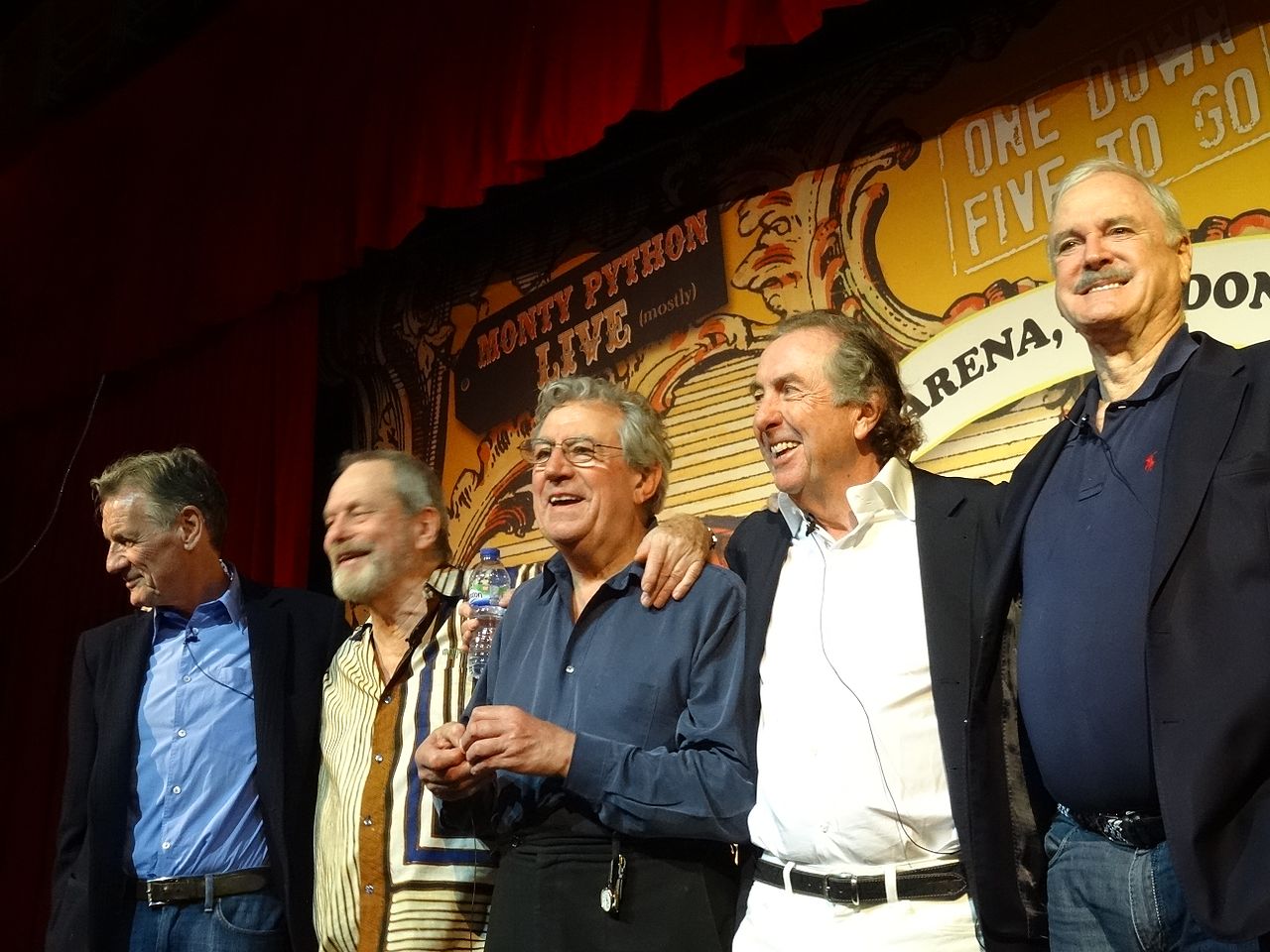
Photograph of the comedy group known as Monty Python, after which the programming language is named.
A month later, I read Beginning Python: From Novice to Professional . With Python, I could build desktop apps, websites, and scripts to automate tasks - all with simple, predictable syntax. Within a few weeks, it became my go-to language, and I went from “Hello World” to much more complex projects.
Using Python to make my life easier
A year later, I was using Python to automate parts of my day. I automated image generation with prices for my online store using ImageMagick. I used Selenium to post products to Facebook groups without relying on the official API (which had disabled group posting at the time).
I also used Django to build and customize an online store for a fan page I ran. By then I’d read plenty of books on Python, Django, and web development, and practiced through tutorials.
I could schedule tasks to run while I did other things. The store made money with little upkeep. In my free time, I studied C, C++, algorithms, discrete math, cryptography, best practices, security, free software, GNU/Linux, differential equations, and anything else that seemed useful.
That’s pretty much how I learned to code - mostly self-taught through books , blogs, tutorials, and a lot of practice.
The Bedu bootcamp
Since many companies want some form of certification, and I wasn’t sure if what I’d learned matched current industry standards (imposter syndrome), I signed up for a six-month bootcamp at Bedu .
It was easy for me thanks to what I’d already practiced. I didn’t learn much new technically, but I met great people - classmates and instructors. Through Bedu, I also got access to Platzi, which turned out to be valuable on its own.

Image taken from Colabora’s website
I did the bootcamp at Colabora Coworking in Chapultepec, Guadalajara.
Maybe I’ll write more about Bedu and Platzi later - this post is already long enough. If you have questions about either, feel free to leave a comment or message me on Twitter .
Related posts
-

-

-

-

-
-